
How Is Yono Games Transforming the Way We Experience Everyday Mobile Entertainment?
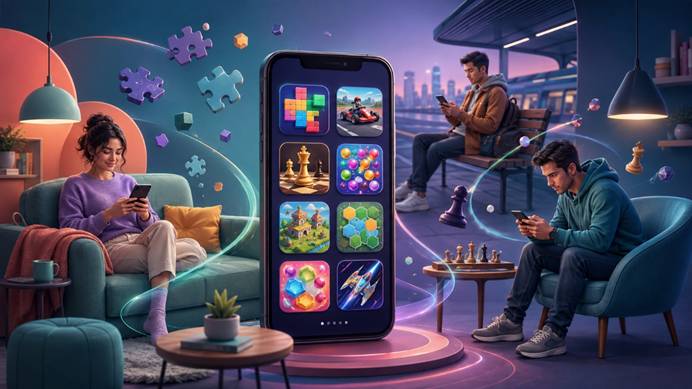
A ten-minute wait can feel surprisingly long when there is nothing to do. Pulling out a phone has become the obvious answer, but the choice that follows is not always about finding the biggest or most sophisticated game. Sometimes people simply want something that works for the few minutes they have.
That is an easy detail to dismiss, yet it says something important about mobile entertainment.
I have noticed that the way people use games on their phones is becoming less tied to the idea of a dedicated gaming session. A game can now sit alongside a commute, a coffee break, a quiet evening, or those odd gaps between plans. The experience does not have to take over the user’s attention for an hour to be worthwhile.
This is where platforms such as Yono Games become interesting. Their relevance is not simply that they put games on a phone. The more interesting question is whether a gaming experience can adapt to the small, unpredictable moments in which people actually use their phones.
The Ten-Minute Session Deserves More Attention
There is a difference between having ten minutes to play and having ten minutes to fill.
If I deliberately sit down to play a game, I am prepared to learn its systems, work through a level, or spend time figuring out what makes it interesting. If I am waiting for an appointment, standing in a queue, or sitting on public transport, my expectations are different.
I want to understand what is happening quickly.
That does not necessarily mean the game has to be simplistic. It means the route from opening the experience to actually enjoying it cannot feel like work.
This is one of the less obvious advantages of mobile gaming. The phone is already part of the daily routine, so entertainment can appear in places where a console or computer would never make sense.
The session may last eight minutes. It may last twenty. It may stop unexpectedly because something else needs attention.
A good mobile experience can accommodate that without making the player feel as though they have failed to finish something.
Convenience Is Not a Small Detail
Game discussions often focus on graphics, mechanics, sound, or content. Those elements are easy to describe because they are visible.
Convenience is harder to measure, but I would argue that it has become one of the defining qualities of everyday mobile entertainment.
Consider what happens when a player encounters unnecessary friction. A confusing menu, a long sequence before the actual game begins, awkward navigation, or an interface designed around assumptions that do not match the user’s situation can turn a potentially enjoyable few minutes into an irritating experience.
There is plenty of competition for a person’s attention. A player does not have to tolerate friction simply because a game might eventually become enjoyable.
This is particularly relevant on mobile devices, where people often play without giving the experience their undivided attention. The game has to communicate clearly without demanding too much explanation.
That is not just good interface design. It is an understanding of the environment in which the game is being used.
More Choice Does Not Always Mean More Commitment
Another thing that has changed is the relationship between players and individual games.
Older gaming habits often encouraged a strong attachment to a particular title. Players bought a game, learned it, progressed through it, and returned to it repeatedly.
Mobile entertainment can be much more fluid.
Someone might play one style of game during a short break and switch to something completely different later. The decision can depend on mood, available time, or simply what happens to catch their attention.
That makes variety surprisingly valuable.
Browsing a collection such as Yono all games can be less about searching for a single game to dominate someone’s free time and more about having different options available for different moments.
I think this is an important distinction. Variety gives players permission to be selective.
They do not have to commit to one experience just because they started it. They can choose something quick when they are busy and something more absorbing when they have more time.
For everyday entertainment, that flexibility can be more useful than depth for its own sake.
The Smartphone Has Removed the Old Boundaries of Gaming
There was once a fairly obvious physical signal that someone was going to play a game.
They sat in front of a television with a controller. They opened a computer at a desk. They picked up a dedicated handheld device.
Smartphones changed that pattern.
Gaming became something that could happen while standing, waiting, travelling, or taking a short break. It moved into the same physical spaces occupied by messaging, music, video and social media.
The change is especially interesting because mobile gaming does not necessarily replace those activities. It competes with them for small portions of attention.
That creates a different kind of competition.
A game does not always need to convince someone to spend their whole evening playing. It may only need to be appealing enough to win the next five or ten minutes.
That is a much narrower challenge, but in some ways it is harder. There are countless alternatives available at exactly the same moment.
Good Mobile Design Knows When Not to Ask for Attention
The best mobile experiences often have something in common: they do not constantly remind the player that they are interacting with a complicated system.
Controls should make sense. Menus should be easy to navigate. The important information should be visible without forcing the player to search for it.
These details become even more important when a game is being used casually.
A player sitting on a train may be dealing with announcements, movement, conversations, or a poor internet connection. Someone playing at home may be interrupted by dinner or a message. Everyday entertainment is rarely as controlled as the environment imagined by a product designer.
That is why simplicity should not be confused with a lack of ambition.
Sometimes simplicity is evidence that a designer understands the player.
The goal is not to remove everything interesting from the experience. It is to remove the things that get in the way of what the player came to do.
The Real Competition Is Not Other Games
This may be the most important point.
Mobile games are not competing only against other mobile games. They are competing against almost every other form of digital distraction.
A person with ten free minutes can watch short videos, scroll through social media, listen to music, answer messages, read an article, or play a game.
The question is therefore not simply whether a game is good.
It is whether the game fits the moment.
That changes how mobile entertainment should be judged. A game that keeps someone occupied for two hours is not automatically more successful than one that makes a short wait more enjoyable. Different situations call for different kinds of experiences.
Yono Games fits into this broader shift because the value of a mobile gaming platform can increasingly be measured by flexibility rather than by how aggressively it demands attention.
The strongest everyday entertainment may be the kind that understands when the player has only a few minutes, gives them something worthwhile to do, and gets out of the way when real life calls.
That is a modest ambition compared with building the next blockbuster game.
But for a device that people carry everywhere, it may be the more useful one.