
Demystifying the Applications of Scissor Lifts
There are many types of equipment in construction projects that grab the attention of everyone who passes by, powered by the diesel engine. But several other machines prove to be just as effective, albeit less visible to the naked eye. They can be found operating closer to the ground and include the Scissor lift, which has turned out to be the most versatile among all the access equipment.
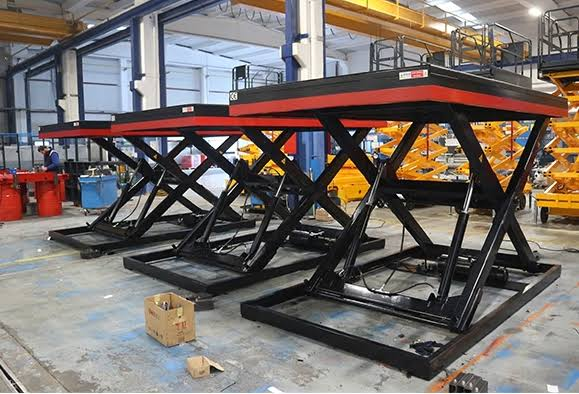
In terms of its construction, a scissor lift is extremely simple, consisting of a platform that moves upwards with the help of a criss-crossing supporting structure. However, inside this deceptively simple construction is a piece of equipment that revolutionized the way people do their jobs at heights.
Be it a new warehouse or an airport terminal, scissor lifts are everywhere now since they solve one very practical problem: to get people, tools, and materials up to a certain point without the use of more complicated access equipment.
Why Vertical Access Matters
All projects reach a certain stage where work is required to go up. Electricians need to run cable trays upward. HVAC mechanics need access to overhead ductwork systems. Painters need to reach large wall areas. Warehouses need to access elevated areas of their storage. Ladders and scaffolding used to play this role, but nowadays, they have been somewhat limiting when it comes to productivity and safety.
A Scissor lift allows the operator to move the machine to a particular spot, raise the platform, do his job, and move to another spot without stopping. When there are hundreds of similar jobs overhead, that extra time becomes valuable.
The Engineering Behind the Machine
A key feature of the scissor lift is the vertical lifting system. In contrast to the articulated platform with an outward movement of the working platform or the telescoping boom used for horizontal displacement, the scissor lift provides the vertical lifting motion along the same axis.
The steel struts cross each other, thereby forming a stable lifting structure which is able to lift heavy objects. The cost of running this operation is obviously dependent on the price of diesel engines. The power source for the lifting motion depends on the type of machine and can be hydraulic, electric, or even diesel engines.
The following benefits are provided by such a design:
- Stable work platform
- Large area of operation
- High weight capacity
- Fast vertical lifting
- Minimal ground space needed
It is the preferred choice of many operators for work that includes a lot of people and equipment on the work site.
- Construction Sites- The Largest Application
Construction is still among the major users of scissor lifts around the world. Building projects have a huge number of overhead tasks to be done at all stages of the project. Mechanical contractors put ductwork into place. Electrical engineers erect lighting systems. Fire protection specialists assemble sprinklers. Special ceiling contractors mount suspended grid systems. In this situation, a scissor lift is often shared equipment.
A fleet of lifts operating together in parallel on different floors and locations on site becomes a tool for increasing project efficiency. Project managers nowadays often assess equipment purchases through productivity indicators; thus, the Scissor lift price plays an important role when trying to balance investment costs with the operational efficiency of the equipment that helps to save labor hours during the whole lifecycle of the project. Maintaining these machines properly is equally important for preserving their efficiency and extending their service life. Reliable Industrial Supply & Hydraulic Hoses can support routine hydraulic system maintenance, helping reduce unexpected downtime and keep scissor lifts ready for demanding jobs.
- Industrial Manufacturing Facilities
Manufacturing plants are unique in their way. Production facilities usually have large networks of pipes, conveyors, ventilation systems, robots, and utility installations located above the production area. Technicians need to work on those installations without stopping production in most cases.
Using a scissor lift, maintenance workers can inspect, repair, and upgrade those installations without any disturbance of the production process. For instance, in automotive assembly plants, technicians use elevated working platforms to maintain conveyor systems installed above the production line. Such demands apply to food processing plants, pharmaceutical facilities, and other heavy manufacturing facilities. The stable platform provided by a scissor lift helps technicians to work with precision.
- Warehousing and Logistics Operations
Taller warehousing facilities are emerging in the contemporary world. Increasing prices of land and growing volumes of inventories make it necessary for the logistics industry to maximize the available space by building upwards. Modern high-bay storage is the main trend among distribution centres across the globe.
Lighting systems, security systems, sprinklers, and structural elements located at great heights become subject to regular maintenance in warehouses. It is necessary to choose a safe and flexible lifting system that will help to perform such work.
Electric scissor lifts are often preferred in 24/7 distribution centres due to low emissions of carbon dioxide and reduced noise. Rapid expansion of the e-commerce industry only stimulates demand for the need of higher access in logistics facilities.
- Aviation and Transportation Infrastructure
Airports are one of the most challenging facilities for maintenance. Ceilings in terminal buildings are very tall. Lighting, signs, communication, and surveillance systems require regular maintenance.
Electric scissor lifts are often used for such operations in passenger terminals because it provides access to the required height without setting up any additional structures. Similar equipment is used in railway stations, sea ports, and public transportation hubs for performing maintenance operations on their infrastructure.
These facilities often have to work according to a tight schedule, which makes the equipment mobility requirement important.
- Integrating with Other Equipment
One of the most understated factors of scissor lift usage includes their integration into the larger ecosystem of equipment. Construction projects of large scale seldom employ one class of machinery. Elevating work may go hand in hand with material handling, concreting, earth moving, and power supply units.
For example, temporary power sources at construction sites tend to include diesel engines because of their cost-effectiveness in generating power for lighting, charging of machines, and other operations. Scissor lifts function in relation to this larger environment.
This knowledge will allow you to optimize the use of equipment in projects rather than treat them as isolated machines.
The Future
Developers of scissor lifts are developing along with the development of new technologies that are applied in construction and industry. Manufacturers offer new battery packs, telematic systems, possibilities of predictive maintenance, and operator assistance systems. It becomes possible to manage and analyse information regarding utilization rates, maintenance, and performance of equipment from one centralized digital platform. When looking at other equipment like power trowel for sale, make sure it is suited to your scissor lift operations.
However, despite all advancements in the construction industry, the principal task of the scissor lift has not changed.